
“A soft landing but risks remain” Critical takeaways from a global economist

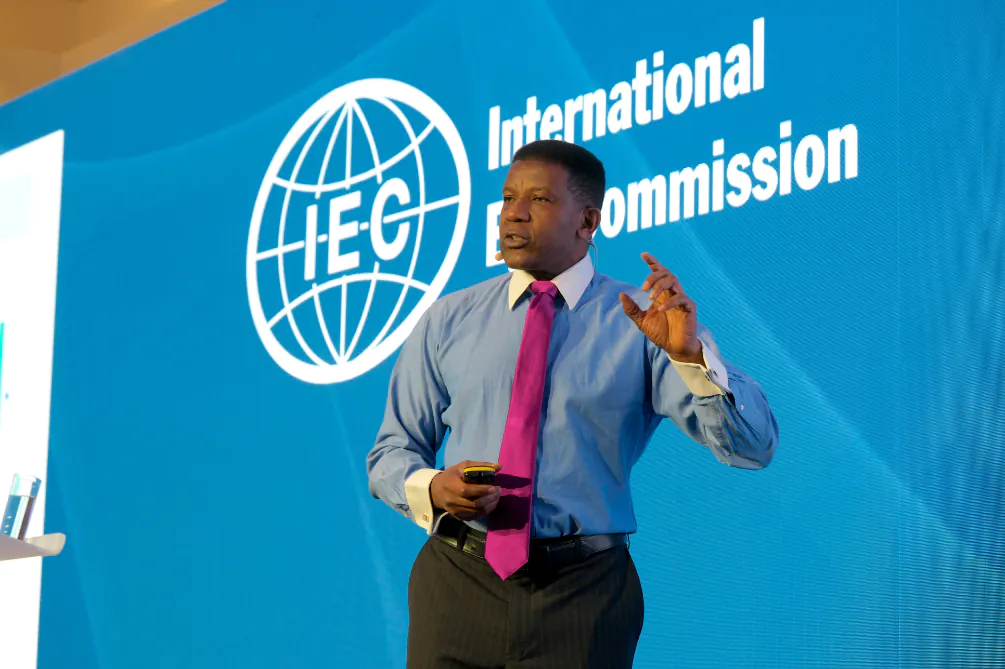
Trevor presenting at The IEC conference 2024

Former Chief Economist at Lloyds Bank, Professor Trevor Williams, delivered an insightful global economic update for delegates at IEC Edinburgh this April.

Discover critical takeaways from Professor Williams’ presentation below or, if you are an IEC Member, watch his full presentation now.

INFLATION IS SLOWING

Professor Williams explained how we have “dodged a bullet” by avoiding a recession following the instability of the last few years, illustrating that global inflation is now falling: “Prices are still going up, but they are going up more slowly – that’s the good news.”

“Global reduction in inflation is forecast to persist – and actually get lower. In other words, inflation will slow further than we’re currently seeing.”

INTEREST RATES WILL HALVE

He explained that with slowing inflation, there is now room for interest rates to fall: “No longer do we need interest rates at the emergency levels they got to in order to ensure that the pressure was against rising prices.”

“It is clear that recovery is underway” Professor Williams said, predicting that, on average, interest rates will “at least halve” over the next 9 months.

POST-PANDEMIC SPENDING POWER

Professor Williams explained how the COVID-19 pandemic has resulted in more spending power for consumers today, which is yet to be put back into the economy: “People who could save in 2020 because of the lockdown, did so. These people have still not spent all the money they saved during this period.”

UNEMPLOYMENT RATES ARE FALLING

He also illustrated that, in many countries, unemployment rates are around the lowest they have been since 2001 – showing geographically widespread recovery in unemployment.

TRADE AGREEMENTS MATTER

Professor Williams reported that international trade plays a crucial role in global prosperity: “The greater the increase in the country’s share of exports and imports, the greater the increase in its GDP per capita. So, the more open markets are, the greater the possibility of prosperity.”

WHAT ELSE?

As part of his exclusive presentation, Professor Williams dissects the economic impact of geopolitical instability, growing populations, and rapid technological change – concluding with what this all means for the egg industry.

Hear more from the expert

Watch Professor Trevor Williams’ presentation now to gain full insight into the global economic outlook (available to IEC members only).

Summary takeaways from the Budget today so far

The £2,000 Pension Salary Sacrifice Cap: Fairness or a Blow to Savings?

When the Chancellor announced a £2,000 annual cap on salary sacrifice into pensions, it appeared as a minor adjustment. However, it could significantly influence the UK’s pension incentive structure, potentially altering saving behaviour, workplace culture, and long‑term capital markets, which warrants closer examination.

A fiscal grab framed as fairness?

Salary sacrifice has long been a tax‑efficient way for employees to boost pension contributions. By giving up part of their salary in exchange for employer pension payments, workers save not only on income tax but also on National Insurance. For higher earners, the savings could be substantial.

The new cap, effective from April 2029, restricts this advantage to the first £2,000 of sacrificed salary. For higher earners, this means they can no longer benefit from tax and NIC savings beyond that threshold, potentially reducing their overall incentives. Lower earners, who typically sacrifice less than £2,000, remain unaffected, which raises questions about the actual fairness and distribution of benefits across income groups.

Incentives Rebalanced — But at What Cost?

For lower earners, the incentive to save remains intact. They continue to enjoy tax relief and NIC savings on modest contributions, preserving pensions as the cornerstone of retirement planning.

For higher earners, however, the calculus changes. The cap removes the extra NIC advantage, reducing the appeal of salary sacrifice. Many may redirect savings into ISAs (lower now?), property, or other vehicles that offer greater flexibility. Employers, too, lose part of the incentive to promote salary sacrifice schemes, potentially weakening workplace pension culture.

The Treasury’s logic is to preserve incentives for mass participation while curbing disproportionate benefits at the top. However, a potential consequence is a decline in pension inflows, which could reduce long-term capital available for investments in equities and infrastructure, possibly affecting market stability and economic growth.

A deeper point is that the UK does not save enough and spends too much relative to its wealth, leading to a chronic current account deficit and reliance on foreign borrowing. This move to cap pension salary sacrifice further reduces savings, which could worsen the country’s fiscal challenges and impact long-term economic resilience. 

A Two‑Decade Tightening Cycle

This reform is not an isolated measure but part of a broader trajectory. Since the lifetime allowance was introduced in 2006, successive governments have narrowed pension reliefs for higher earners:

• 2006: Lifetime allowance set at £1.5m, later cut repeatedly.

• 2016: Annual allowance tapering introduced, reducing relief for incomes above £260,000.

• 2024: Lifetime allowance abolished, replaced by new lump sum limits.

• 2029: Salary sacrifice cap imposed.

The policy seeks to preserve incentives for lower earners while restricting them for higher earners to raise revenue. Each reform has been framed as fairer, but collectively they risk undermining pensions as a long‑term savings vehicle for those with the capacity to save more. The result has been the same: to raise more money.

Equity vs. Efficiency

The cap highlights a tension at the heart of pension policy. On the one hand, equity demands that tax reliefs do not disproportionately benefit the wealthy. On the other hand, efficiency requires strong incentives for all earners to save for retirement. By narrowing reliefs, the government may achieve Fairness, but at the cost of efficiency, discouraging higher earners from using pensions and reducing the capital available for long‑term investment.

The Bigger Picture

There was a fiscal hole to fill, and this is seen as one way to help fill it. Moreover, with the ‘triple lock’, pensioners have seen their income rise relative to other income groups over time. 

But this cap may also lead to a shift in savings behaviour. Pension funds could see reduced inflows, potentially changing asset allocation patterns. Future pensioners might save less, increasing the risk of poverty among retirees and raising social security costs, which highlights the importance of considering long-term social impacts in the debate.

Ultimately, the £2,000 cap is not just a technical adjustment but the latest chapter in a 20‑year tightening cycle. As much as any other item of fiscal policy, pensioners are not immune to the pressure put on the public purse.

Whether it proves to be a fair rebalance or a blow to savings will depend on how individuals, employers, and financial markets respond. I don’t think it will be positively.